
Blacktop Parking Lot Paving Around Kansas City
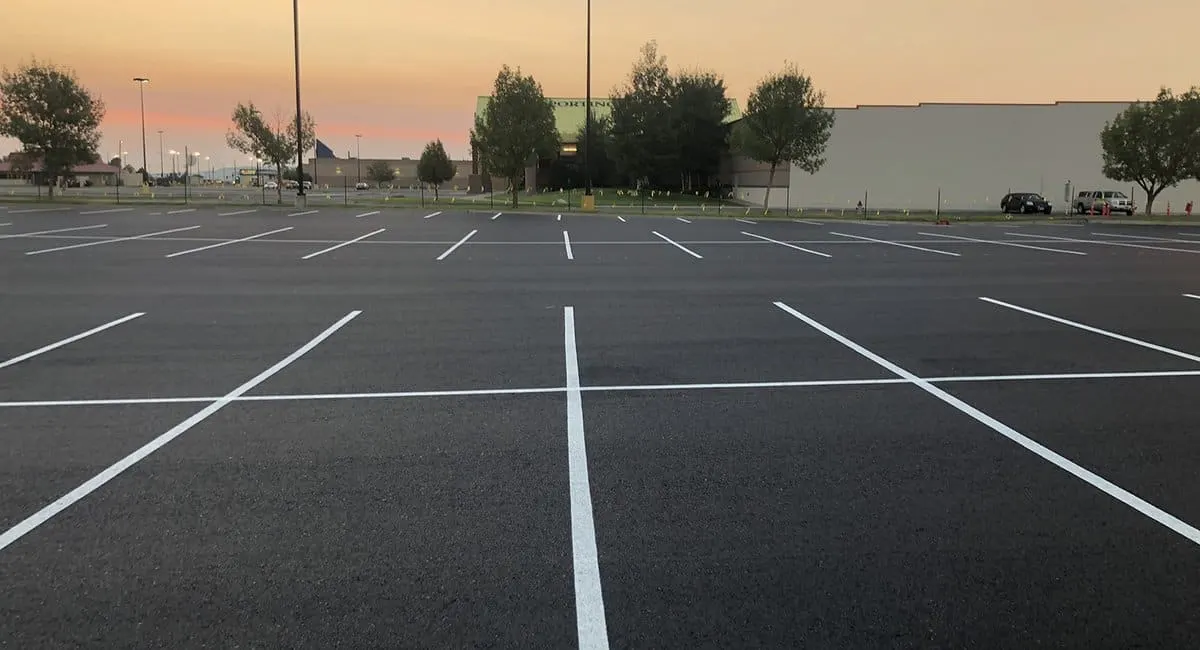
A good blacktop parking lot starts with a walk of the site, not a paving quote. Before any asphalt goes down in the Kansas City area, you need to know how vehicles move across the lot, where water goes, and whether the base underneath can carry the traffic. Those three answers decide the scope, and they are what our parking lot paving work is built around.
What to assess before paving a parking lot
Start with traffic. Stand at the entrance and watch where vehicles enter, turn, park and load. The tight turns and the delivery spots take the most abuse, because tires twisting on a hot surface scuff and shove asphalt faster than straight driving does.
Then look at the surface itself. Walk the lot after a rain if you can, or look for the stains and dried rings that standing water leaves behind. Here is what to note:
- Low spots and areas where water sits after rain
- Sections that have sunk, rutted or shifted
- Alligator cracking, which is a web of small connected cracks that usually points to a weak base
- Crumbling edges where the pavement meets grass, curbs or gravel
- Cracks wide enough to catch water and debris
Finally, ask whether the existing base can support the planned use. The base is the compacted stone layer under the asphalt, and it does most of the structural work. If a lot that was built for cars now sees box trucks or trash haulers, the old base may not be enough, and a thin new layer on top will not fix that.
How layout and drainage shape the paving plan
Layout comes first because it fixes where the heavy loads land. Drive lanes, parking rows and delivery access each see different traffic, and the plan should treat them that way. A drive lane that trucks use every day may need a thicker section than a row of stalls that only sees passenger cars.
Drainage is the other half. The finished surface should slope so runoff moves away from buildings and toward a suitable drain, swale or edge. Water that sits on blacktop softens the base from below and works into every crack, so a lot with poor slope will fail early no matter how good the asphalt is.
Base, binder and surface course
Asphalt lots are usually built in layers. The base is the stone foundation. The binder course is the coarser asphalt layer above it that carries load. The surface course is the smoother top layer you see and drive on. Ask your paving contractor how those layers fit your traffic, and whether the plan is a full rebuild, a section repair or an overlay (a new surface layer over sound existing pavement).
| Condition you see | What it often points to | Scope to discuss |
|---|---|---|
| Scattered thin cracks, surface still firm | Surface wear | Crack repair and possibly an overlay |
| Alligator cracking or ruts | Weak base or overloaded traffic | Remove and rebuild the affected sections |
| Standing water after rain | Poor slope or settled areas | Regrading, patching and drainage correction |
| Crumbling edges | Water getting in at the perimeter | Edge repair and drainage at the edge |
For larger sites with delivery traffic, our commercial asphalt paving page covers how we approach that heavier work.
Local conditions around Kansas City
Kansas City winters bring freeze-thaw cycles. Water gets into cracks and weak spots, freezes, expands, and thaws again, and each round pries the pavement apart a little more. Lots with open cracks going into winter tend to show the damage in late winter and early spring.
Wet or cold weather can also narrow the paving window in November and December. Asphalt needs to be placed and compacted while it is still hot enough to work, so cold days and rain can push a job back. If you want the work done before winter, settle the scope early in the fall rather than waiting for the first cold snap.
The lot matters more than the zip code. For a property in Independence, Kearney or Smithville, do not assume conditions match the lot next door. If your site is clay, sits at the bottom of a slope, or backs onto open ground, those are conditions to point out when the contractor walks it. Soil and slope change how much base work and drainage correction the plan needs.
What to gather before requesting a paving estimate
A tighter request gets a tighter estimate. Before you call, pull together a few things:
- The rough area to be paved, including any sections you want left alone.
- The kinds of vehicles that use the lot, especially delivery trucks, buses or equipment.
- Drainage concerns, such as where water pools and where it should go.
- Damaged edges, sunken spots and any access needs, like keeping one entrance open during work.
Then ask the contractor to explain the proposed base work and surface scope in plain terms. You should hear what gets removed, what gets repaired, how thick the new layers are planned to be and how water will leave the site. If the answer is only a price for a new top layer, ask why the base does not need attention.
We offer a Free Estimate for parking lot projects, and a walk of the lot with your notes in hand is the quickest way to get a scope that fits.
Common questions
How long should I stay off a new blacktop parking lot?
Many crews ask for 24 to 48 hours before regular vehicle traffic, and longer before heavy trucks or sharp turning, especially in warm weather. Your contractor can give a timeline based on the mix and the day's temperature.
Can you pave over an existing parking lot instead of replacing it?
Sometimes. An overlay can work when the base is sound and the cracking is only on the surface. Alligator cracking, ruts and standing water usually mean those areas need to be rebuilt first.
What should a commercial blacktop paving estimate include?
It should describe the area, the base work, the thickness of the asphalt layers and how drainage will be handled. Ask also whether striping and edge repair are part of the scope.
Areas we serve
Our services
Have a question about your project? Call (816) 984-3033